
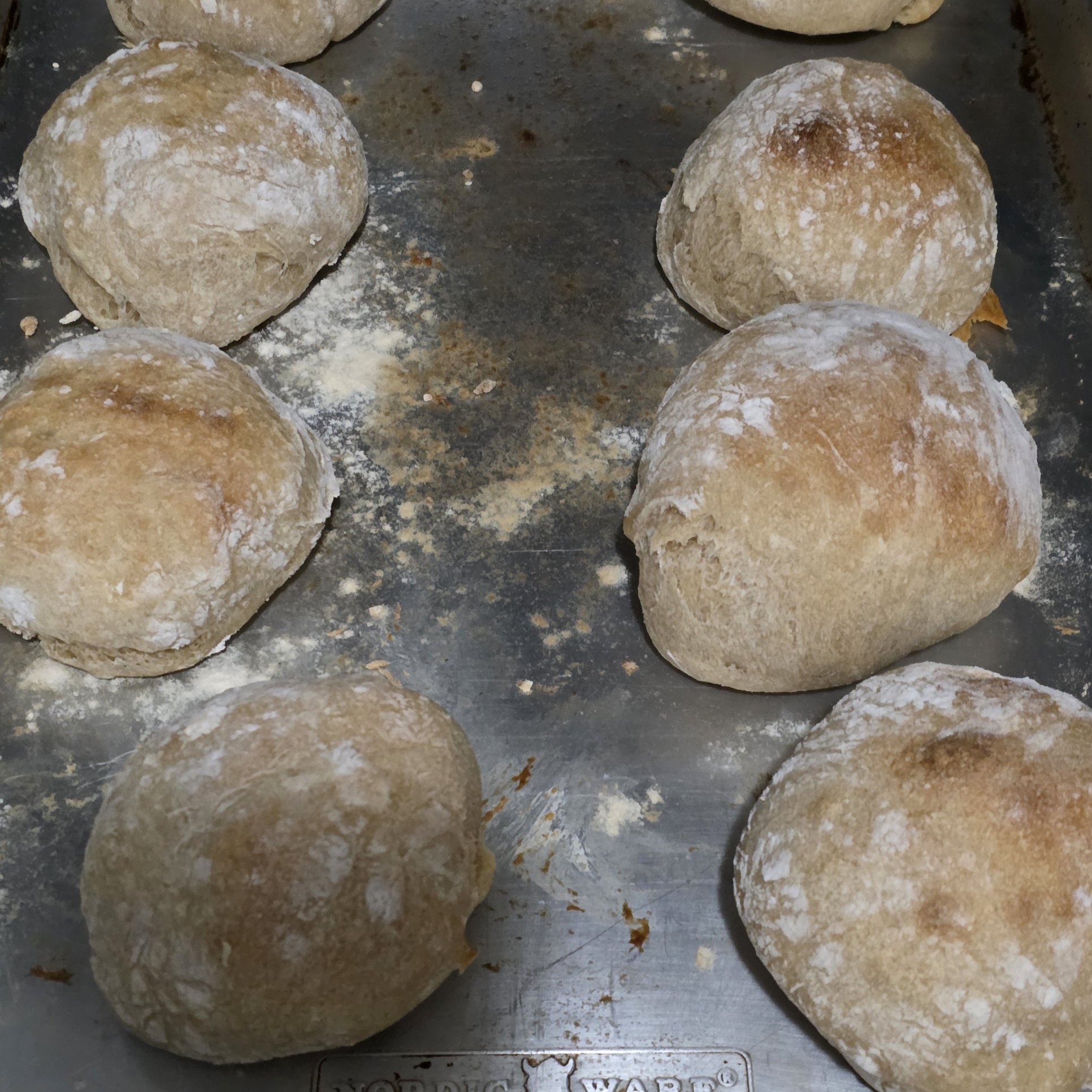
Big, crusty sourdough rolls you can start after breakfast and tear open at dinner. A little whole wheat adds flavor, and a small boost of instant yeast keeps them on schedule, even in a cool kitchen. They're big enough to hollow out into mini bread bowls.
100 g active sourdough starter, fed and bubbly
375 g warm water (about 1½ cups)
¼ cup more warm water, only if the dough is dry
450 g bread flour
50 g whole wheat flour
10 g salt (about 1¾ tsp)
2 tsp instant yeast
1 tbsp warm water, for the yeast
Flour, for dusting the counter and pan
1 cup hot water, for steam
The night before, feed your starter equal weights of starter, flour and water and leave it on the counter. By morning it should be doubled, domed and bubbly. If it barely moved, feed it again and give it 4 to 6 more hours.
Mix the starter, 375 g warm water, bread flour and whole wheat flour until there's no dry flour left. If it feels stiff and shaggy, add more warm water a splash at a time, up to ¼ cup. Cover and rest 30 minutes.
Dissolve the yeast in 1 tbsp warm water. Add it and the salt to the dough, then squeeze and fold until both disappear into it.
Do 3 or 4 sets of stretch and folds, 30 minutes apart: grab one edge, stretch it up, fold it over, turn the bowl and repeat all the way around. Keep the bowl somewhere warm, around 75 to 80°F. An oven with just the light on works, or a microwave with a mug of just-boiled water next to the bowl. Don't use the oven's warm setting. It runs too hot and will kill the yeast.
Let the dough rise until it's puffy, about 50% bigger, with bubbles along the sides of the bowl. Plan on 1½ to 2 hours after adding the yeast, longer if your kitchen runs cool.
Turn the dough onto a floured counter and divide it into 8 pieces, about 125 g each. Tuck each piece under itself a few times, then roll it against the counter under a cupped hand to tighten the surface. The dough is soft, so floured or wet hands help. Space the rolls out on a floured sheet pan, or set them close together in a 9x13 pan for pull-apart rolls.
Cover and proof somewhere warm for 30 to 45 minutes, until puffy and a gentle poke springs back slowly. Meanwhile, set an empty pan on the bottom rack and preheat the oven to 450°F. If the rolls are proofing in the oven, take them out first.
Slash the top of each roll if you like. Slide the rolls in, pour the hot water into the empty pan for steam and shut the door fast. Bake 18 to 22 minutes, until golden and about 200°F inside. For deeper color, brush the tops with water before baking or give them a few extra minutes. Cool 10 minutes before tearing in.
Skip the yeast and give it time instead. After the stretch and folds, leave the dough alone until it's 50 to 75% bigger, domed and jiggly. That's usually 4 to 6 hours at room temperature.
Shape it into one tight round and proof it seam side up in a floured bowl for 1 to 2 hours. For more sourdough tang and easier scoring, cover it and proof it in the fridge overnight instead, then bake straight from the fridge.
Bake in a Dutch oven preheated to 450°F: 20 minutes with the lid on, then 20 to 25 minutes with the lid off, until deep brown and 205 to 210°F inside. Let it cool a full hour before slicing. It's still cooking inside.
Michael's notes
It's very dry where we live, so I needed about ¼ cup more water than the recipe calls for. In a more humid place you may not need any. The dough should feel soft and a little tacky, not stiff.
Our house runs cool, and the dough barely moved until I added the yeast partway through. Adding it with the salt gets you there sooner. Watch the dough, not the clock.
Main: Pear Balsamic Dijon Pork Stew. Hollow out a roll and fill it.
Dessert: Giant Chocolate Chip Cookies
The backstory
We had starter in the fridge and had promised the kids fresh bread with dinner. Then the afternoon got away from us, and our house runs cold, so the dough sat there doing almost nothing.
I took a professional baking class in college, so bread doesn't scare me, but even I can't make a cold kitchen hurry up. So I spiked the dough with instant yeast and switched from a loaf to rolls, since rolls bake in about 20 minutes instead of 40 and don't need an hour to cool.
It worked. The rolls came out big enough that I hollowed a couple out as mini bread bowls for the kids and filled them with pork stew. Fresh bread still made it to the table before bedtime.